Marvel Rivals vs Overwatch 2 for a loss-limited challenge run and why Marvel Rivals suits it better
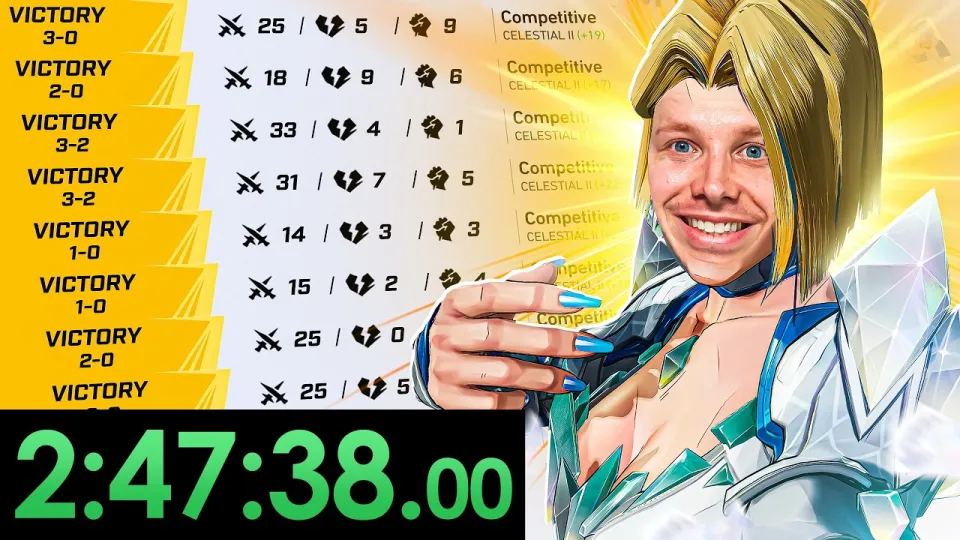
Video: IF I LOSE, THE VIDEO ENDS... (Marvel Rivals)
Want articles like this for your own video to promote it on YouTube and Google? Order them through the Telegram bot @sat_sit_bot. Articles with your video embedded are written and posted by the bot itself — on popular topical sites (no ads). Free trial — 50 articles.
· based on the channel Jay3
Marvel Rivals is the better pick for a loss-limited challenge run because its 6v6 structure, destructible maps and team-up abilities produce more chaotic, readable swing moments than a standard Overwatch 2 ladder session, while a single loss still works as a hard stop that keeps every match tense. Jay3's video builds its entire premise on that rule: one defeat and the video ends, so each round carries the weight of a finale. The full run and the live version of it are on Jay3's Twitch channel, where the streams behind these edits happen.
What the one-loss rule actually changes in Marvel Rivals
A loss-limited run converts a team game into a survival format, because the player cannot absorb a bad lobby and move on. Marvel Rivals is a free-to-play 6v6 hero shooter from NetEase, launched in December 2024, and its matches are short enough that a single defeat feels like a sudden ending rather than a slow decline. The rule forces three shifts in how a session plays out:
- Hero picks become conservative. Off-role experiments cost the run, so comfort picks and proven team-up combos get priority.
- Map selection matters more. Destructible terrain on maps like those in the Yggsgard and Tokyo 2099 sets can erase cover a player was counting on, which punishes positioning that works in static shooters.
- Tilt management becomes the real skill. One bad fight does not just cost a point; it can cost the whole video.
That structure is why the format reads well on stream: viewers can track a single number, the loss counter, and understand the stakes without any explanation.
Why Marvel Rivals suits the format better than a standard Overwatch session
Marvel Rivals rewards the same hero-shooter fundamentals Jay3 built his reputation on in Overwatch, but it adds systems that generate visible turning points. Team-up abilities, where specific hero pairings unlock bonus effects, create moments that are easy to read even for a viewer who does not know the roster. Destructible environments do the same: a wall that disappears mid-fight is instantly legible drama.
The practical comparison for anyone choosing which game to run this challenge in:
- Roster size and role clarity. Marvel Rivals splits heroes into Vanguard, Duelist and Strategist, the same tank-damage-support triangle Overwatch uses, so a Grandmaster-level Overwatch player transfers most game sense immediately.
- Match length. Short matches mean a loss-limited run can cover several games in one video without dragging.
- Spectacle per minute. Ultimate abilities tied to recognizable Marvel characters give each fight a clear visual anchor.
- Ranked volatility. Because the game is younger and its ranked population is still settling, lobby quality varies more, which raises the chance of the kind of disaster that ends a run.
That last point cuts both ways, and it is exactly what viewers argue about in the comments.
Typical questions and complaints from viewers of Marvel Rivals challenge videos
The most common viewer reaction to a loss-limited Marvel Rivals run is not about the format but about teammates, because ranked volatility decides the outcome as much as the player does. Recurring themes in the discussion around Jay3's video include:
- Throwers in placement matches. Players report matches where a teammate deliberately sabotaged the game, for example by teleporting the team off the objective or away from the spawn door, which turns a placement run into a coin flip.
- Targeted harassment in-game. A Spider-Man player repeatedly diving one streamer is a frequent complaint; it is flattering and annoying in equal measure, and it distorts the run because the enemy team is effectively playing a different game.
- Requests for Overwatch content. A slice of the audience still asks for Overwatch, which is a fair signal that the two games share an audience rather than competing for one.
- Small comedic moments. Chat tends to latch onto reactions, screams and off-hand jokes more than the actual scoreline, which is why these edits lean on personality.
- Matchmaking experiments. Long-running viewer requests include pitting a team of low-ranked players against a team of the rank they believe they deserve, a format that would test how much of ranked is mental.
Anyone running this challenge should expect the same: the loss counter will be decided by lobby quality at least as often as by individual skill.
How to run your own loss-limited Marvel Rivals challenge
A loss-limited run works best when the rules are fixed before the first match, so the ending cannot be argued with. A simple setup that mirrors the video's premise:
- Pick a single queue type, either ranked or quick match, and stay in it for the whole session.
- Declare the stop condition out loud on stream: one loss ends the run, no exceptions for disconnects or throwers.
- Cap the session at a set number of wins as a secondary goal, so the run has a finish line even if you never lose.
- Record the loss counter on screen; viewers need one number to follow.
- Review the losing match afterwards and name the single decision that cost it, which turns a dead end into content.
The format scales: it works as a short video, as a full stream segment, or as a recurring series with a running record across episodes.
Where to find Jay3's Marvel Rivals streams and clips
Jay3's content is split across platforms, and each one serves a different purpose for a viewer who wants more than the edited video. The live channel is the source for unedited matches, including the losses that never make the cut; the YouTube channels split main uploads, gameplay, variety and VODs so a run can be followed in whichever format you prefer.
- Live streams: https://twitch.tv/jay3
- Twitter/X updates: https://twitter.com/jay3ow
- TikTok clips: https://tiktok.com/@jay3twitch
- Instagram: https://instagram.com/jay3twitch
- Community Discord: https://discord.gg/jay3
For a challenge format like this one, the VOD channel is usually the better archive, because a run that ends early is often followed by a second attempt in the same stream.
The verdict on Marvel Rivals as a challenge-run game
Marvel Rivals gives a loss-limited challenge run more upside than a comparable Overwatch session, mainly because team-up abilities and destructible maps create turning points that a viewer can see without knowing the meta. The one-loss rule is what makes it a format rather than a playlist: it converts ranked volatility, throwers and unlucky lobbies into the actual story. Jay3, a Grandmaster-level Overwatch player turned variety streamer, uses that tension well by keeping the rule absolute and letting the reactions carry the edit. If you want to see how the next attempt goes live, follow Jay3 on Twitch and catch the run before it is cut down to a highlight.
Key takeaways
- Jay3's Marvel Rivals video uses a one-loss-and-the-video-ends rule, turning every match into an elimination game.
- Marvel Rivals is a free-to-play 6v6 hero shooter built on destructible environments and team-up abilities between heroes.
- The format borrows from Overwatch content culture, where Jay3 built his audience as a Grandmaster-level player.
- Viewer discussion around the video centers on ranked throwers, Spider-Man players targeting streamers, and requests for Overwatch content.
- Jay3 streams live on Twitch and posts across several YouTube channels, with clips and VODs split by channel.
Source: IF I LOSE, THE VIDEO ENDS... (Marvel Rivals) · Markdown version
Questions & answers
What is the rule in Jay3's Marvel Rivals video?
The premise is simple: if Jay3 loses a match, the video ends. That turns every game into an elimination round and makes the loss counter the main thing viewers track. The format is a content device, not a game mode, so it can be applied to ranked or quick match.
Is Marvel Rivals hard to learn for an Overwatch player?
The core is familiar: Vanguards, Duelists and Strategists map onto tank, damage and support roles, and most aim and positioning habits carry over. The new parts are team-up abilities, which reward specific hero pairings, and destructible environments that change what counts as cover. An experienced Overwatch player usually needs a few sessions to learn the roster and the map layouts.
Why do so many Marvel Rivals ranked games feel decided by teammates?
The ranked population is still settling, so lobby quality varies widely and a single player can swing a match. Viewers regularly report deliberate sabotage, such as a teammate teleporting the team off the objective, along with enemy players focusing one streamer all game. In a loss-limited format, that variance becomes the story rather than a footnote.
Where can I watch Jay3 play Marvel Rivals live?
Live streams run on Twitch at https://twitch.tv/jay3, and shorter clips appear on TikTok and the YouTube channels. Full unedited sessions, including the losses that get cut from highlight videos, are the best way to see how a challenge run actually plays out.